Teaching Portfolio
Apurva Nakade, Assistant Teaching Professor, Department of Applied Mathematics & Statistics, Johns Hopkins University
Teaching philosophy
After more than a decade of teaching, I have come to understand that my role in the classroom and beyond is to provide guidance and support in students’ discovery of their own mathematical skills and potential. I believe that the best way to learn mathematics is through making mistakes, getting confused, and struggling toward a solution. I consider myself a coach and a facilitator and teach with the core philosophy that my primary goal is to provide students with a welcoming and inclusive environment where experimentation is encouraged and honest mistakes aren’t penalized. It is important to me that students who complete my courses leave with a sense of pride and accomplishment, and with increased interest in mathematics, curiosity, and self-confidence.
My teaching experience ranges from creating advanced electives and short bootcamp courses for small groups of students to managing and teaching in-person courses with several hundred students, coordinating multi-section classes, and adapting large service courses for asynchronous education. I have contributed to open source texts using technologies such as Webwork, Quarto, Pretext, and RMarkdown, and I’m involved in the long-term project of math formalization using the Lean theorem prover. I have taught topics spanning calculus, linear algebra, differential equations, discrete math, linear programming, math formalization, manifolds, algebraic topology, Monte Carlo methods, and computational math.
A central theme in my teaching has been adapting courses to student needs without watering down the content. I have redesigned most of the courses I teach, and a few ideas recur. I let students resubmit work to recover lost points, so they learn that mathematics is an iterative process rather than a rush to a final answer. I prefer frequent, smaller assessments to a few high-stakes exams. I write online-first course materials with code built in, and give older students final projects that offer them agency and a chance to showcase their skills. I also adapt courses to a post-AI world, deemphasizing what AI does better and encouraging students to use it to strengthen their learning. The course-by-course details are under Courses below.
Courses
I teach in the Department of Applied Mathematics & Statistics at Johns Hopkins, as an Assistant Teaching Professor since 2026 and a Senior Lecturer from 2023 to 2026. Before that I was a Postdoctoral Lecturer at Northwestern (2021-2023) and a Postdoctoral Fellow at Western Ontario (2019-2021). The last group of Johns Hopkins courses below dates from my Ph.D. in the Department of Mathematics (2014-2018).
Discrete Mathematics JHU EN.553.171
| Semester | Student level | Students | TAs | Course rating1 | Instructor rating |
|---|---|---|---|---|---|
| Spring 2026 | Undergraduate | 30 | 4 | ||
| Fall 2025 | Undergraduate | 45 | 4 | ||
| Spring 2025 | Undergraduate | 25 | 4 | ||
| Fall 2024 | Undergraduate | 41 | 5 | ||
| Fall 2023 | Undergraduate | 56 | 3 |
Sample materials
2025
- Modernized the course using evidence-driven pedagogical techniques
- Introduced homework resubmissions, so students can recover lost points and stop rushing to a final answer; mathematics is a creative, iterative process
- Replaced two long midterms with three in-class midterms, so students focus on a few topics at a time and a single bad score does not sink their grade
- Switched to an online textbook with built-in exercises; students now work regularly instead of only near deadlines and exams, and the grades of weaker students improved drastically
- Introduced online assessments to improve feedback
- Several of the course’s TAs have gone on to TA other courses
Selected student comments
The professor cares about the students and invests heavily in them. He is always very focused on the student’s learning evidenced by checking in with them during lecture to make sure they understand.
The material is a range of topics that are fascinating and a solid overview of the AMS major. It was challenging but made me excited for future classes in AMS!
Each lecture was interesting and presented in a very approachable way. The professor for this course was one of my favorites here at Hopkins thus far.
One of the best aspects of this course is our professor’s exceptional teaching. The textbook can be limited and sometimes hard to understand, but our professor always explains difficult concepts in a way that is clear, logical, and easy to grasp. He chooses his words carefully and teaches with precision and structure.
The grading system is very fair and gives you leniency on things like a missed homework. Dr Nakade actually cares about students’ understanding which sometimes feels rare at Hopkins.
Dr. Nakade is an excellent teacher and really explained not only the material but how it was useful in different ways. He also seems to care greatly about the course and the students as well.
Really interesting topics, fair and passionate instructor. This instructor did make me love math for the first time.
Monte Carlo Methods JHU EN.553.433/633
| Semester | Student level | Students | TAs | Course rating | Instructor rating |
|---|---|---|---|---|---|
| Spring 2026 | Undergraduate and master’s | 29 | 2 | ||
| Fall 2025 | Undergraduate | 15 | 2 | ||
| Spring 2025 | Undergraduate and master’s | 26 | 2 | ||
| Fall 2024 | Undergraduate | 14 |
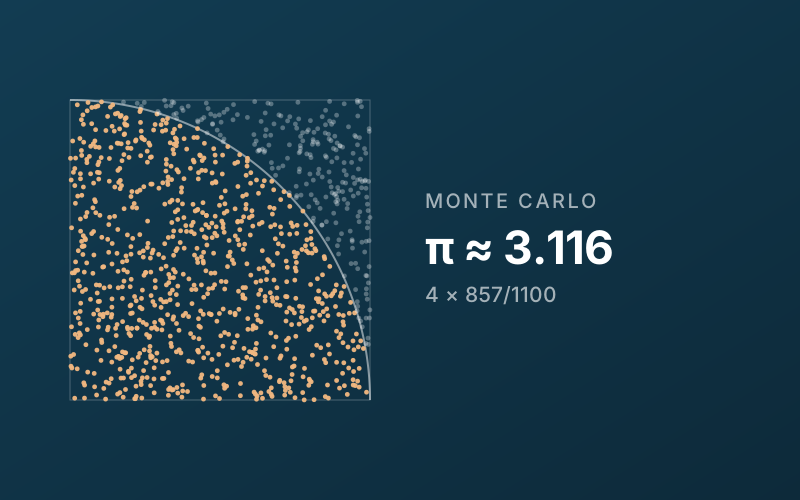 Project pageMonte Carlo MethodsCourse notes for a semester-long JHU AMS course on simulation and Monte Carlo estimation.
Sample materials
2025
- Updated the previous instructor’s course to align with the ways students learn today
- Rewrote course notes with an online-first approach, creating a course website instead of a traditional textbook
- Incorporated code directly into the online textbook for seamless integration of theory and practice
- Restructured weekly homework to include both programming and theory components: the theory explains the rationale behind the algorithms, and the programming immediately shows how to apply it
- Replaced traditional exams with weekly quizzes; the course covers fragmented topics with no central theory and nothing to memorize, and quizzes help students keep up with fast-paced material and reduce exam anxiety
- Added a final project, giving seniors and master’s students agency in their learning and a way to showcase their skills; non-math majors have produced papers and software worthy of being presented at conferences
- Adapted the course for a post-AI world: students are encouraged to use AI assistants for programming assignments and final projects, but only their theoretical understanding is evaluated, and the final project requires a detailed report with the mathematical analysis
- Awarded a JHU Open Educational Resources Faculty Grant (2026, joint with Dhruv Azad) to develop interactive visualization apps for this and other computational math courses
Selected student comments
The course is taught very well and the course design is very good where you are learning something and then immediately being quizzed on it which really makes sure that you understand the content you are learning.
Wonderful course, all the content was very practical. In fact I used one of the topics in my paper right after being taught it (Bootstrapping).
Fantastic course, great teaching, super interesting content, great course structure. Love the quizzes, homework and presentation concept.
I really liked how the course was structured: weekly quizzes, interactive Jupyter notebooks, and a variety of various topics. The instructor did a really great job designing the weekly homeworks and quizzes, and it was very enjoyable to do the final project.
Fun topics, I liked that the course was centered more around learning rather than exams. I learnt a lot in a very unstressful environment.
Introduction to Computational Mathematics JHU EN.553.385
| Semester | Student level | Students | TAs | Course rating | Instructor rating |
|---|---|---|---|---|---|
| Spring 2026 | Undergraduate | 49 | 2 |
Sample materials
Selected student comments
Prof. Apurva is always open to reviewing even the most basic concepts and simplifies complicated concepts so it’s clear that he truly understands them. He does a great job engaging the class and encouraging participation. Even when I don’t know the answer, I feel safe enough to guess because I know he’ll find a way to validate the guess, so I don’t feel stupid in front of the class.
I really appreciated that there were no midterms and that homework was graded for completion. I felt like these policies reduced my stress a lot and made it much easier to learn a large amount of material.
You get to learn the part of math that they don’t really teach you: convergence and stability.
Intermediate Probability and Statistics JHU EN.553.311
| Semester | Student level | Students | TAs | Course rating | Instructor rating |
|---|---|---|---|---|---|
| Summer 2026 | Undergraduate | 2 | |||
| Summer 2025 | Undergraduate | 13 | 2 | ||
| Spring 2025 | Undergraduate | 19 | 0 |
Selected student comments
Professor Nakade is great, he cares about his students and it is much easier to learn from him.
The professor’s in-class problems and homework problems are extremely relevant to understanding the course, and are very helpful when studying for the exams.
Foundational Mathematics of Artificial Intelligence JHU AS.110.110
| Semester | Student level | Students | TAs | Course rating | Instructor rating |
|---|---|---|---|---|---|
| Summer 2026 | High school | 13 | 1 | ||
| Summer 2025 | High school | 36 | 1 |
Sample materials
Summer 2025
- Revamped the entire course to fit the audience of smart, motivated high school students with limited mathematical and programming background
- Made sessions interactive and flipped most classes
- Designed collaborative learning activities where students work with each other
- Incorporated discussions on topics like AI ethics, which got students hooked on the subject
- Developed a streamlined Python curriculum to teach programming from scratch and quickly transition to applications
Selected student comments
I had never done coding before, and this course, although challenging at times, did teach me a lot and provided me with an excellent base.
How class time is split into two, with one part being lecture overall and the other being everyone coding individually. Also the professor. He goes around the classroom in the second half and helped everybody a lot with their codings and projects.
This course is very intellectually challenging, and I really enjoy the group discussions of the material, as they are very engaging and lead to more learning overall.
This course is definitely more fast pace and will often go past a lot of material very quickly. Despite that it was extremely enjoyable and satisfying and unlike any other course I’ve ever taken.
Honors Algebra II, online JHU AS.110.412
| Semester | Student level | Students | TAs | Course rating | Instructor rating |
|---|---|---|---|---|---|
| Spring 2025 | Undergraduate | 1 | 0 | ||
| Fall 2024 | Undergraduate | 2 | 0 | ||
| Spring 2024 | Undergraduate | 2 | 0 |
Graph Theory JHU EN.553.472/672
| Semester | Student level | Students | TAs | Course rating | Instructor rating |
|---|---|---|---|---|---|
| Spring 2024 | Undergraduate and graduate | 25 | 2 |
Sample materials
Selected student comments
The instructor explains all the topics perfectly, and his passion for the same is clearly evident. The structure of the course is in such a way that you feel like you are solving puzzles all the time.
Instructor is enthusiastic and lectures are organized, material is explained very clearly. Nice breadth and depth of topics covered for a first course in graph theory. … Final project in lieu of final exam was a great added learning experience.
Despite being a proof-based math class, there is not much assumed background to take this class. So, if you enjoy discrete math and brain teasers this is a perfect matching (no pun intended.)
Linear Algebra and Differential Equations JHU EN.553.291
| Semester | Student level | Students | TAs | Course rating | Instructor rating |
|---|---|---|---|---|---|
| Spring 2024 | Undergraduate | 56 |
Selected student comments
Professor Nakade explains topics very clearly and class is very easy to follow, despite the content being very difficult. The lecture notes that students are given are also extremely helpful. Overall, the course is very well organized and engaging. It’s my favorite course this semester.
This course is extremely difficult, but the lectures are taught very well, in a clear manner. At no point do I feel lost in what is being explained.
There aren’t so many students in my session, so I can have very direct communications with the professor, and he remembers each of our names.
Engineering Innovation JHU EN.800.110
| Semester | Student level | Students | TAs | Course rating | Instructor rating |
|---|---|---|---|---|---|
| Summer 2024 | High school | 23 | 1 |
Single-Variable Differential Calculus Northwestern MATH 220-1
| Semester | Student level | Students | TAs | Course rating | Instructor rating |
|---|---|---|---|---|---|
| Fall 2021 | Undergraduate | 38 |
Selected student comments
Apurva was a great professor. He explained everything very clearly and gave great lecture notes. In class we did lots of practice problems which was super helpful.
He was very patient in answering questions and was very good at helping you work through the problem to find exactly where you were getting stuck and then working through the rest. This way he was able to teach us what to do without doing it for us.
Introduction to Optimization Northwestern MATH 368
| Semester | Student level | Students | TAs | Course rating | Instructor rating |
|---|---|---|---|---|---|
| Spring 2022 | Undergraduate and graduate | 15 | 1 | ||
| Winter 2022 |
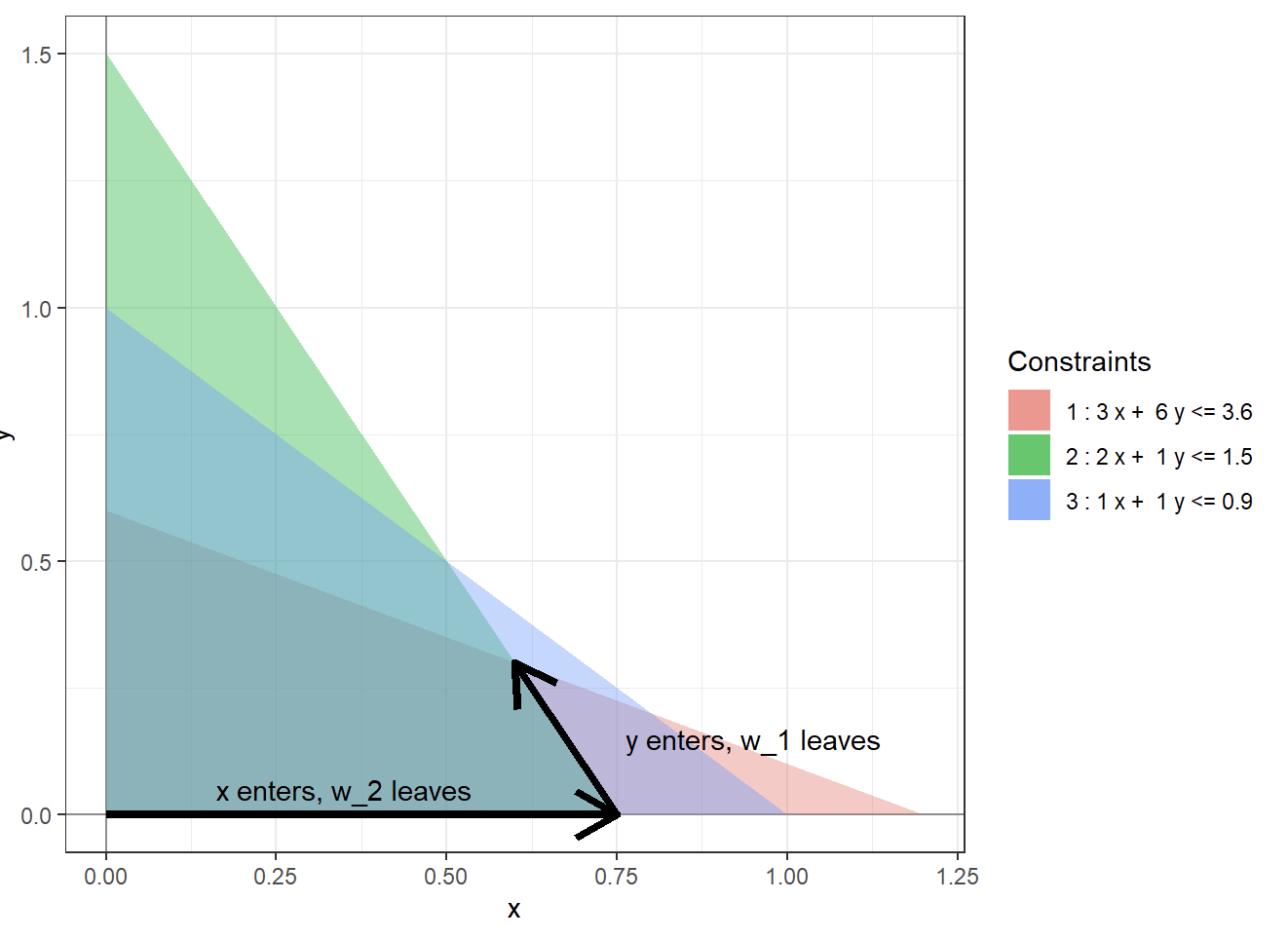 Project pageIntroduction to OptimizationA quarter-long course on linear programming and duality, rebuilt around applications and modeling.
Selected student comments
Apurva is phenomenal! He broke down key concepts with ease, and homework questions went over a variety of different examples. Optimization is interesting as a whole due to it [sic] wide applicability in other fields, but I felt this was an enjoyable course because of Apurva.
He explains difficult concepts in a digestible way, and makes sure everyone has the time and space to ask questions and apply the material they are learning.
Foundations of Higher Mathematics Northwestern MATH 300
| Semester | Student level | Students | TAs | Course rating | Instructor rating |
|---|---|---|---|---|---|
| Winter 2023 | Undergraduate | 24 | 1 |
Selected student comments
Apurva is a great professor, and he really helped make the class enjoyable. He learned all of our names, and he was super approachable. His weekly office hours were super helpful for working through the homework and discussion worksheets. His lectures were really engaging, as he asked a lot of questions for the students to answer and work through.
Elementary Differential Equations Northwestern MATH 250
| Semester | Student level | Students | TAs | Course rating | Instructor rating |
|---|---|---|---|---|---|
| Spring 2023 | Undergraduate | 17 |
Selected student comments
Apurva was always willing to help, and also explained things very clearly. High quality prepared notes that were available to review later. Great energy for an early morning class. Obviously cared about the subject and student success.
Discrete Structures for Engineering Western Ontario MATH 2151A
| Semester | Student level | Students | TAs | Course rating | Instructor rating |
|---|---|---|---|---|---|
| Fall 2020 | Undergraduate | 197 | 2 |
 Project pageDiscrete Math, Fully AsynchronousRebuilding a second-year discrete math course for fully asynchronous delivery, with video lectures and hundreds of WeBWorK problems.
Selected student comments
You are enthusiastic and while the course material was not my favourite, your teaching made it my favourite class!
This course presented some difficult concepts, but Apurva explained everything really well and was very organized in his teaching. He’s also super understanding and it’s evident that he cares a lot about his students, a characteristic that, sadly, is not present in many professors.
There really is no improvement I can find. The organization is perfect, the length of the lectures is perfect, the content inside the lectures themselves are clear and simple, the follow-up questions are perfect, and even the first midterm was extremely fair and was exactly what the prof said it would be like.
Calculus I Western Ontario Calculus 1000A
| Semester | Student level | Students | TAs | Course rating | Instructor rating |
|---|---|---|---|---|---|
| Fall 2019 | Undergraduate | 177 | 2 |
Selected student comments
Apurva Nakade has so far been the best professor I have had. I believe that his methods for teaching and leading a class is highly effective in terms of presenting ideas and concepts in a way that can be learned efficiently.
Calculus II Western Ontario
| Semester | Student level | Students | TAs | Course rating | Instructor rating |
|---|---|---|---|---|---|
| Winter 2020 | Undergraduate |
Algebraic Topology Western Ontario
| Semester | Student level | Students | TAs | Course rating | Instructor rating |
|---|---|---|---|---|---|
| Winter 2021 | Graduate |
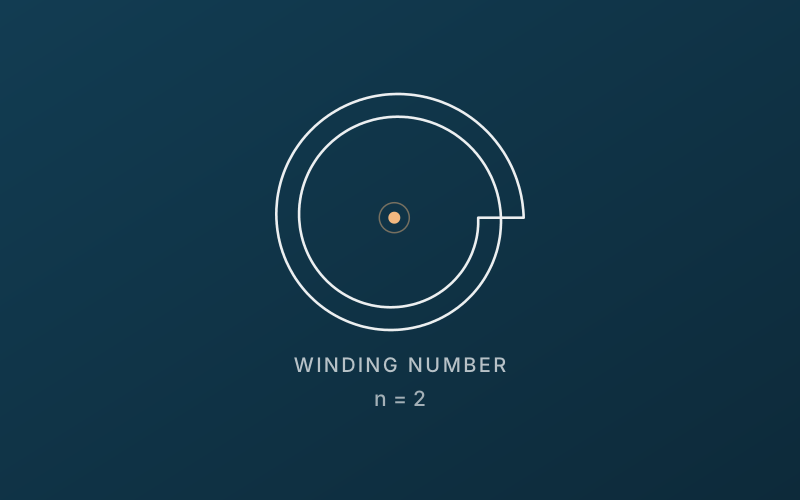 Project pageAlgebraic TopologyProblem sets from a graduate course on the fundamental group, covering spaces, and singular homology.
Topology Bootcamp Western Ontario
| Semester | Student level | Students | TAs | Course rating | Instructor rating |
|---|---|---|---|---|---|
| Fall 2020 | Graduate |
Topics in Category Theory Western Ontario
| Semester | Student level | Students | TAs | Course rating | Instructor rating |
|---|---|---|---|---|---|
| Fall 2019 | Graduate |
Honors Single Variable Calculus JHU AS.110.113
| Semester | Student level | Students | TAs | Course rating | Instructor rating |
|---|---|---|---|---|---|
| Fall 2018 | Undergraduate | 9 | |||
| Fall 2017 | Undergraduate |
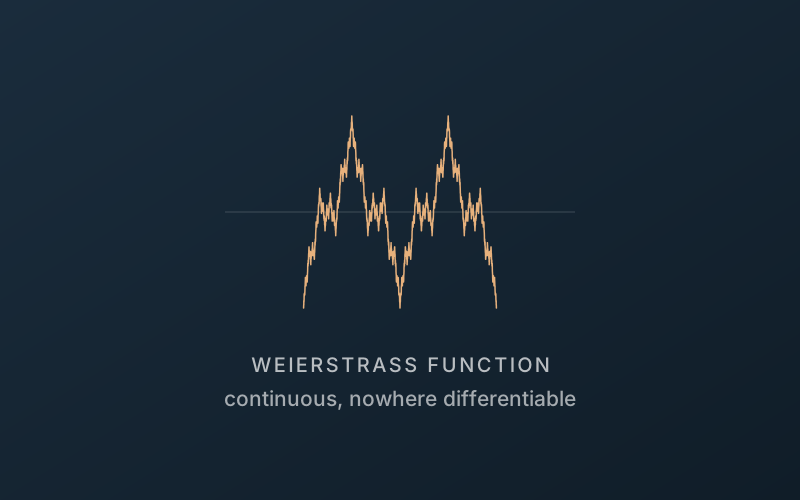 Project pageHonors Single Variable CalculusTwo semesters of calculus in one, taught IBL-style in a flipped classroom.
Selected student comments
Apurva is great. He answers any questions you have and always gives you feedback. If there is something you’re not understanding, he takes the time to walk you though [sic] it. He is very understanding that life still happens outside of class and is just a great teacher in general.
The course was heavily tailored to the students and was a good introduction to proofs. … I understand how to write mathematical proofs much better and I feel more confident in my understanding of calculus.
Differential Equations with Applications JHU AS.110.302
| Semester | Student level | Students | TAs | Course rating | Instructor rating |
|---|---|---|---|---|---|
| Summer 2017 | Undergraduate | 11 | |||
| Summer 2015 | Undergraduate | 9 |
Selected student comments
Apurva is a great teacher, he knows how to present content in a succint [sic] and easily absorbable way.
He inspired us to ask the important questions about math, to explore the foundations of mathematics, and to pursue further academic engagements in math, physics and engineering. He is an enlightened and devoted teacher and friend.
Symmetries and Polynomials JHU AS.110.361
| Semester | Student level | Students | TAs | Course rating | Instructor rating |
|---|---|---|---|---|---|
| Intersession 2018 | Undergraduate | 10 |
 Project pageSymmetries & PolynomialsA two-week intersession course taking non-math majors from group theory to the unsolvability of the quintic.
Selected student comments
The no homework and freeform style of working through worksheets that break up the proofs was really cool.
Hitchhiker’s Guide to Algebraic Topology JHU AS.110.360
| Semester | Student level | Students | TAs | Course rating | Instructor rating |
|---|---|---|---|---|---|
| Intersession 2017 | Undergraduate | 11 |
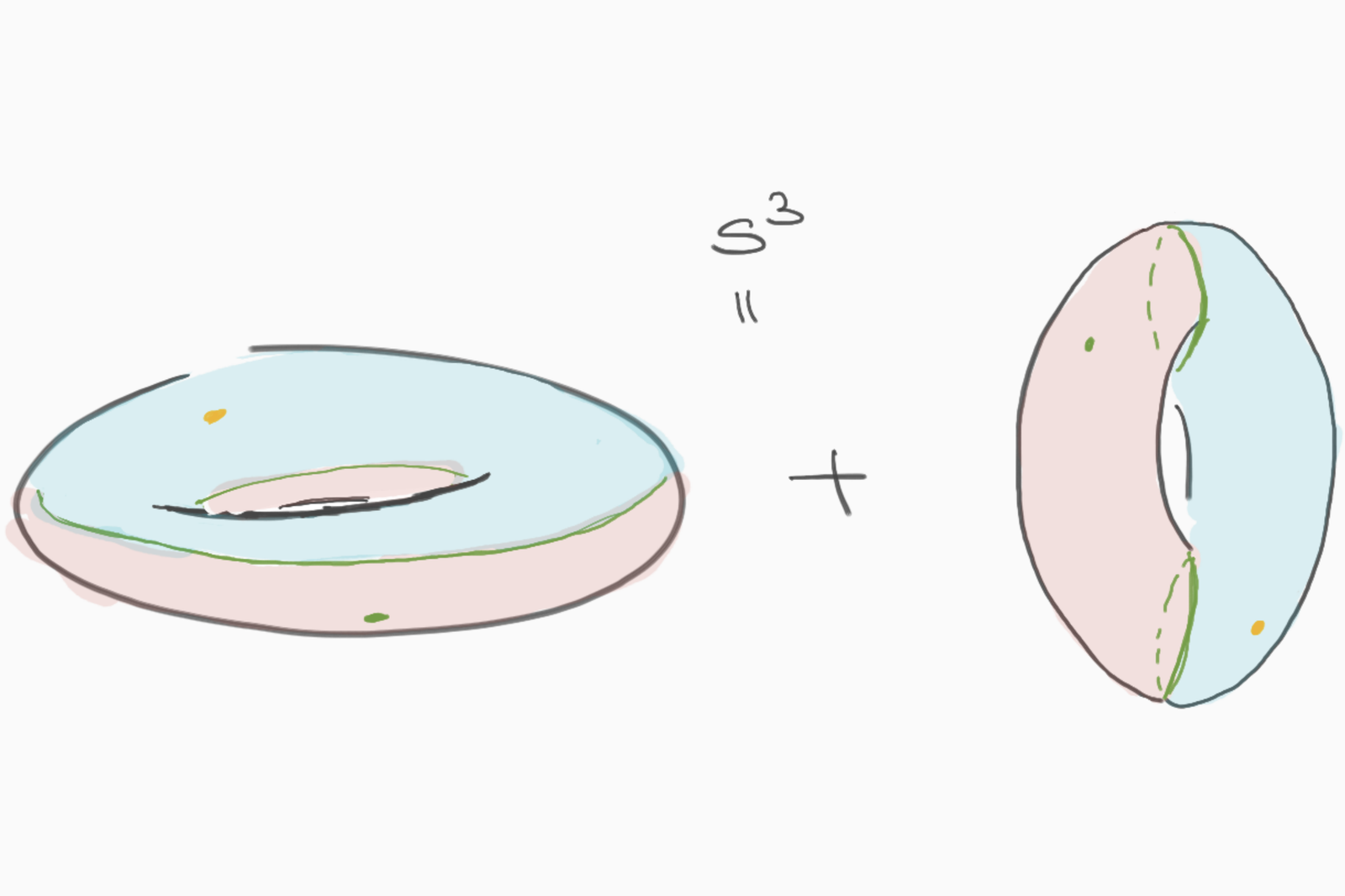 Project pageHitchhiker's Guide to Algebraic TopologyA two-week intersession course introducing non-math majors to algebraic topology and its applications.
Selected student comments
Apurv [sic] is an engaging and funny instructor who is passionate about the subject. He doesn’t hesitate to stop and ask if anyone has a question before proceeding on through relatively dense mathematical material.
It’s great! Take it, especially if you’re not a math major but are interested in mathematical concepts.
Online Linear Algebra JHU AS.110.201
| Semester | Student level | Students | TAs | Course rating | Instructor rating |
|---|---|---|---|---|---|
| Summer 2014 | Undergraduate | 34 |
Selected student comments
I wasn’t expecting an online course to be run so well. In many ways, it is comparable to an actual class. The lectures for [sic] interactive and helpful. Homework submission was easy and painless. The grading was fair.
Awards and grants
- Open Educational Resources Faculty Grant (joint with Dhruv Azad), JHU, 2026: $5000 to develop interactive visualization apps for computational math courses
- Open Educational Resources Faculty Grant (joint with Aaron Greicius), Northwestern, 2022: WeBWorK problems for an open-source PreTeXt linear algebra textbook
- William Kelso Morrill Award for Excellence in Mathematics, JHU, 2019: awarded each year to the mathematics graduate student who best displays love of teaching, love of mathematics, and concern for students
- Finalist, KSAS Excellence in Teaching Awards, JHU, 2019: honors the graduate teaching assistants in the School of Arts and Sciences for the care they take with their subject and their students
- Prof. Joel Dean Award for Excellence in Teaching in Mathematics, JHU, 2016: recognizes mathematics graduate students for extraordinary teaching of undergraduates
Professional development
I have completed a Faculty Forward Fellowship and a certification course at the Teaching Academy at JHU, where I learned about several important pedagogical concepts such as inquiry-based learning, backward course design, and learning objectives, which I regularly incorporate into my own teaching. I regularly attend workshops at the Center for Teaching Excellence and Innovation at JHU, and I am a member of the MAA’s Project NExT’20 cohort. Besides new skills, these workshops let me take on the role of a student and stay grounded.
- Faculty Forward Fellowship, JHU, 2025
- MAA Section NExT Fellow, MD-DC-VA Section, 2023-25
- Introduction to Education Research Workshop, JHU, 2023
- MSRI Critical Issues in Mathematics Education Workshop, 2022
- MAA Modeling Inspiration for Differential Equations Workshop, 2022
- MAA Project NExT Fellow, Brown’20 cohort, 2020
- Mathematical Association of America Member, 2020-Present
- Workshops by the Center for Teaching and Learning, UWO, 2019-2020
- Online Mastery Grading Workshop, 2019
- Teaching Academy Certification, JHU, 2019
- Science of Learning Symposium, JHU, 2014-2018
Syllabi and sample materials
Public copies of my recent course sites are collected on the course pages. Each keeps the syllabus, schedule and notes as students saw them; homework, quizzes and exams are not posted publicly.
- Discrete Mathematics (Fall 2026): course page, syllabus (PDF), exam guides with topics, policies and grading criteria
- Monte Carlo Methods (Spring 2026): course page, syllabus (PDF), final project with guidelines and deliverables and assessment (PDF slides)
- Introduction to Computational Mathematics (Spring 2026): course page, syllabus (PDF), final project with guidelines and deliverables and assessment (PDF slides)
- Foundational Mathematics of Artificial Intelligence (Summer 2026): course page with the daily outline and class notes, course project
- Graph Theory (Spring 2024): course page, syllabus (JHU public syllabus), final projects with the report template (PDF)
Footnotes
Each rating is the mean response to one of the two headline questions of the end-of-term student evaluations. At Johns Hopkins these are “The overall quality of this course is” and “The instructor’s teaching effectiveness is”, on a scale of 1 to 5; at Northwestern, “Provide an overall rating of the course” and “Provide an overall rating of the instruction”, on a scale of 1 to 6; at Western Ontario, “Course as a learning experience” and “Effective as a university teacher”, on a scale of 1 to 7. For a semester with several sections, the rating is the average over all respondents in all sections. The full reports are on GitHub.↩︎